Judiciary Chairman Jim Jordan says subpoenas could be used as lawmakers investigate prosecutors in sanctuary jurisdictions
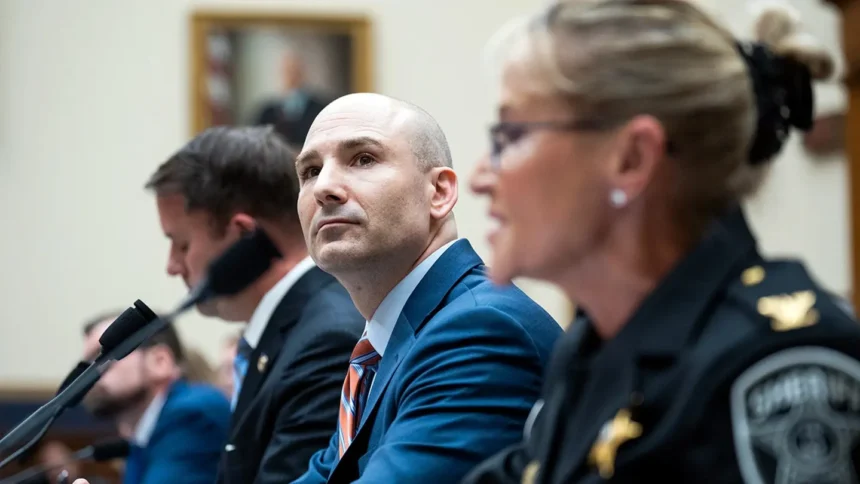
House Judiciary Committee Chairman Jim Jordan is escalating congressional scrutiny of prosecutors in so-called sanctuary jurisdictions, warning that subpoenas could be issued if local district attorneys do not provide documents requested by his committee.
Among those facing attention is Fairfax County Commonwealth’s Attorney Steve Descano, whose approach to cases involving noncitizens has come under renewed criticism from Republican lawmakers.
Jordan, R-Ohio, said his committee is examining prosecutors who may consider a defendant’s immigration status when making decisions about criminal cases. He said lawmakers are first attempting to obtain information voluntarily but could resort to compulsory legal measures if necessary.
“We want to know the facts,” Jordan said, explaining that the committee typically makes multiple requests and works with officials before considering subpoenas.
Fairfax prosecutor faces scrutiny
Descano has been a particular focus of the investigation.
The Fairfax County prosecutor, who took office in 2020, drew national attention following the stabbing death of Stephanie Minter, a 41-year-old U.S. citizen. Abdul Jalloh, a Sierra Leone national who prosecutors accuse of killing Minter, entered the United States illegally in 2012.
The Department of Homeland Security has said Jalloh had been arrested more than 30 times before Minter’s death.
Jordan has pointed to the case while criticizing Fairfax County’s approach to immigration-related issues. He has argued that policies limiting cooperation with federal immigration authorities can make it more difficult to identify and detain individuals who may face deportation.
Immigration consequences policy under examination
Descano’s office previously issued guidance concerning plea negotiations that directed prosecutors to consider potential immigration consequences in appropriate cases.
According to local reporting, the guidance instructed prosecutors to consider the immigration consequences associated with particular criminal charges when evaluating plea agreements.
Critics, including Jordan, argue that such policies can result in prosecutors treating immigration status as a factor when deciding how criminal cases are handled.
Supporters of the approach say prosecutors can consider the broader consequences a criminal conviction may have on defendants while still enforcing state and local criminal laws.
Fairfax County’s sanctuary status
Fairfax County has been described as a sanctuary jurisdiction because local authorities place limits on cooperation with federal immigration enforcement.
Jordan sharply criticized that approach, arguing that local and federal law enforcement agencies should cooperate when investigating criminal activity and enforcing federal law.
He also highlighted Fairfax County’s location in the Washington, D.C., metropolitan area, saying the area’s proximity to major federal institutions makes public-safety decisions there particularly significant.
Other prosecutors may face scrutiny
Jordan indicated that Fairfax County is not the only jurisdiction being examined.
He pointed to other prominent prosecutors, including Manhattan District Attorney Alvin Bragg and Philadelphia District Attorney Larry Krasner, as examples of officials whose policies could receive congressional attention.
The broader investigation comes amid an intensifying national dispute over sanctuary policies, immigration enforcement and the relationship between local prosecutors and federal agencies.
Soros-linked political funding draws attention
Descano has also faced political scrutiny because his 2019 campaign received substantial support from the Justice and Public Safety PAC, an organization that has counted billionaire philanthropist George Soros among its financial supporters.
Critics have used that funding connection to characterize Descano as part of the progressive-prosecutor movement. The funding itself, however, does not establish that Soros personally directed Descano’s prosecutorial decisions.
The congressional investigation remains ongoing, and it is not yet clear whether the committee will issue subpoenas or what additional actions lawmakers may take.
For now, Jordan says the committee’s primary objective is to obtain records and determine how prosecutors in sanctuary jurisdictions handle criminal cases involving people who may also face federal immigration consequences.