The battle for control of the United States Congress is entering its final stretch, with more than 20 million Americans already casting ballots ahead of the November 3 midterm elections.
New figures compiled by the Associated Press reveal unusually strong early voter participation in several states expected to play decisive roles in determining which party controls the Senate.
By Thursday, October 22, more than 20 million early votes had been recorded across 46 states. Texas led with approximately 2.36 million ballots, followed by California with around 2.32 million.
The figures demonstrate significant voter engagement before Election Day, although high early turnout does not necessarily mean that total turnout will break records.
Early voting can reflect people choosing to vote sooner rather than an increase in the final number of voters.
Nevertheless, the numbers illustrate the intensity of the country’s political environment.
President Donald Trump has been campaigning for Republican candidates, seeking to maintain his party’s congressional influence during the final two years of his current presidential term.
On Thursday, Trump appeared in Sioux City, Iowa, to support Republican Senate nominee Ashley Hinson, who is competing against Democratic state lawmaker Josh Turek.
Iowa has traditionally provided Trump with strong electoral support, but several statewide contests have become competitive.
The president’s appearances are intended to motivate Republican supporters, particularly voters who participate in presidential elections but do not always cast ballots in midterms.
Democrats are pursuing a different strategy, emphasizing affordability, healthcare, energy costs and concerns about the administration’s policies.
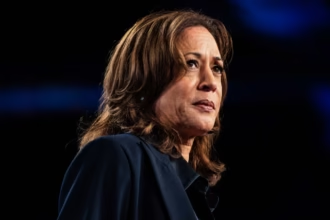
Former Vice President Kamala Harris campaigned alongside Democratic Senate candidate Scott Colom in Mississippi, while Representative Alexandria Ocasio-Cortez appeared in Maine to support Democrat Troy Jackson.
Jackson is challenging Republican Senator Susan Collins in a contest that could influence Senate control.
Other closely watched races are unfolding across the country, making relatively small changes in turnout potentially consequential.
An important factor is the difference between presidential elections and midterms.
Presidential contests often attract enormous public attention because voters are selecting the country’s chief executive.
Midterm elections, by contrast, determine control of Congress without the presidency appearing on the ballot.
That distinction can make turnout organization especially important.
Political campaigns are investing in voter registration efforts, early voting reminders, advertising and direct contact with potential supporters.
At the same time, controversies involving election identification requirements and voter eligibility investigations have become prominent.
Some Republican officials argue that stronger identification requirements improve election security and public confidence.
Voting-rights advocates counter that additional documentation requirements can create difficulties for eligible voters, particularly when election procedures change shortly before ballots are cast.
These disagreements are increasingly reaching the courts.
The economy remains a central issue for voters.
Higher gasoline prices, borrowing costs and household expenses are influencing debates about whether current federal policies are helping or hurting American families.
Republicans are emphasizing their economic priorities and asking voters to maintain their congressional majorities.
Democrats are presenting the election as an opportunity to impose greater oversight on the administration and change the government’s direction.
The outcome will affect legislative negotiations, federal spending, committee leadership and investigations during the next two years.
If Republicans maintain both chambers, the president may have a more favorable environment for advancing major legislative proposals.
If Democrats gain control of one or both chambers, negotiations could become more difficult, and congressional oversight of the administration could increase.
Despite the strong early voting figures, the final outcome remains uncertain.
Campaign strategists will be watching whether early participation represents a lasting shift in voter behavior or simply a change in when supporters cast their ballots.
With Election Day approaching, both parties face the same immediate challenge: converting political enthusiasm into enough votes to win competitive districts and states.